Decades after abandoning its rocket program, a state once known for wine and heavy manufacturing is betting its economic future on the cosmos.
When SpaceX went public in June, CommSec, the lead Australian stockbroker for the float, had to open a call centre over a long weekend to handle the flood of mum-and-dad investors seeking to open trading accounts. About 30,000 Australian retail investors piled into the IPO, whether inspired by the mission to occupy Mars or the fear of missing out on a quick profit.
But investors do not need to look all the way to SpaceX’s production site at Starbase, Texas, to find the space economy. There is plenty happening in South Australia, where a passion for science has led to a homegrown space sector, helped in part by the state government establishing the South Australian Space Industry Centre almost a decade ago.
There, start-ups are also shooting for the stars – and their own public floats – and those goals are not as otherworldly as they may sound.
In May, a capsule carried into orbit on a Falcon 9 rocket – the reusable rockets developed by SpaceX – tore back through the atmosphere at 30,000km/h before landing under a parachute at South Australia’s Koonibba Test Range. It was the fourth commercial spacecraft to touch down at that test range, about 800 kilometres north-west of Adelaide, in the past year and a half.
Southern Launch, which supports rocket testing and spacecraft re-entry, operates the remote 41,000-square-kilometre landing site, equivalent to about 2 million Melbourne Cricket Ground playing ovals. It operates the site in partnership with the Koonibba Community Aboriginal Corporation.
The capsule that landed at Koonibba in May belonged to US-based life sciences company Varda Space Industries, a Southern Launch customer. It was used for US government work, but Varda’s capsules more often contain pharmaceuticals manufactured in space.
Gravity affects the formation of crystalline structures, and Varda believes producing drugs in microgravity can improve the manufacturing process before returning the drugs to Earth.
Customers such as Varda have prompted Southern Launch to scale up its spaceport infrastructure, drawing in investors such as former Macquarie Group chief executive Nicholas Moore. In June, Southern Launch completed a $25 million capital raising, valuing the company at about $100 million.
“Space is really starting to take off in South Australia, and that’s because everyone is recognising the critical part that space plays in everyday life and how Australia can play a unique role in developing a global space economy,” Southern Launch’s chief executive Lloyd Damp says.
“You can think of us like any other infrastructure. We are a transportation hub – you get on the highway to space at one of our spaceports.
“With all the investors that we’ve been engaging, they see how space is that next infrastructure frontier.”
Southern Launch belongs to a cluster of South Australian space companies that have collectively raised hundreds of millions of dollars.
Fleet Space, the biggest local player, aims to transform the hunt for critical minerals through satellite-enabled underground mapping. Other established names include Myriota, which uses satellites to connect remote devices; Inovor, a satellite manufacturer; and Neumann Space, which builds plasma propulsion systems.
Even Queensland-based rocket maker Gilmour Space, which closed a $217 million funding round in January, has opened a representative office in Adelaide.
By the South Australian government’s count, its space ecosystem is home to more than 100 organisations and employs more than 1500 people. Including defence, the sector contributes $2.2 billion annually to the state’s economy.
And it is set to get bigger.
Last month, at the Adelaide Convention Centre, space executives such as Damp rubbed shoulders with Labor delegates as the Australian Space Forum and the ALP’s national conference convened at the shared venue.
Industry Minister Tim Ayres used the forum to unveil the federal government’s Statement on Space, which included a vision for Australia to be the spaceport of the Indo-Pacific.
“We want to see more Australian ideas commercialised, more Australian technology deployed globally, and more of the economic value harnessed here at home,” said Ayres, adding that the space sector was vital to Australia’s economic resilience and national security while also creating export opportunities.
The global space economy is expected to reach $US1.8 trillion ($2.55 trillion) by 2035.
So how did South Australia – a state better known for wine, car manufacturing, churches and serial killers – become the nation’s space capital?
“You have to start with Woomera,” says space historian Kerrie Dougherty, author of Australia in Space: A History of a Nation’s Involvement.
In 1947, in the aftermath of World War II, the United Kingdom needed a vast, unpopulated, secure landmass to test long-range missiles and rockets. Despite being populated by Indigenous groups, South Australia’s outback was deemed to fit the brief, and the Anglo-Australian Joint Project established what became known as the Woomera Test Range. Woomera is named after the Dharug word for a spear-throwing implement.
By the late 1950s and through the 1960s, Woomera was one of the busiest rocket ranges on Earth – second only to NASA’s Cape Canaveral in Florida.
In 1967, Australia launched the Weapons Research Establishment Satellite atop a modified American Redstone rocket, making Australia one of only a handful of countries to launch a satellite from its own territory.
It was the pinnacle of Woomera’s two decades as a launch centre. But as the British program wound down, Australian governments proved unwilling to replace the funding, meaning no enduring commercial industry emerged.
“Because the country had been absent from space activities during the 1970s, it had effectively lost its ‘space qualification’,” Dougherty writes in her book.
There was another push for a space industry in the 1980s, followed by another retreat. “The thing in Australia is that it’s been like a rollercoaster. It’s just literally up and down, up and down, up and down,” Dougherty says.
In the 1990s, it was not clear that Adelaide would have any claim on the future of space. The economy was in recession, and the state bank had collapsed.
“The state was f---ed in the early 90s,” says a Labor conference attendee mixed in with the space forum crowd, who had moved east as a young adult. “There were just no jobs.”
Midway through the decade, there were signs of recovery. The state economy was growing at 4 per cent, and the city found a hometown space hero in Andy Thomas – a graduate of the University of Adelaide’s mechanical engineering program. In 1996, he became the first Australian-born professional astronaut to reach space, flying aboard the Space Shuttle Endeavour.
Thomas spent 177 days in space and captured the public’s imagination when he passed almost directly over Adelaide on his maiden voyage. Adelaide residents switched on household and outdoor lights to send him a visual greeting from home.
Thomas became a US citizen to fly with NASA. His career inspired a generation, but also showed Australia offered no path to space of its own. By 2008, it was one of only two OECD countries without a national space agency.
Adelaide’s moment came in 2017 with a visit from Elon Musk. In September of that year, the city hosted almost 4500 delegates from 84 countries for the week-long International Space Congress. On its opening day, then-federal minister Simon Birmingham announced Australia would establish its own space agency.
Four days later, on the final afternoon of the conference, Elon Musk took to the stage to update the global space community on his plans to colonise Mars.
That day, the clock also began ticking on a wager Musk had made with Atlassian co-founder Mike Cannon-Brookes to build a 100-megawatt battery in South Australia in 100 days, or it would be free.
Musk delivered what was then the world’s largest lithium-ion battery on time, helping prove the technology could be commercially viable. By 2025, renewables supplied 77 per cent of the state’s power.
Three weeks after Musk in Adelaide sketched out his plan for Starship – a giant, fully reusable rocket system built to carry people and cargo to orbit Earth, and eventually the moon, and Mars – the last Holden produced at the Elizabeth plant in South Australia rolled off the production line. It marked the closing of one industry as another took shape.
Ayres sees space as something of a successor to the automotive industry and a catalyst for his Future Made in Australia agenda – a $23 billion subsidy commitment to move towards net zero and increase domestic manufacturing.
“The SpaceX IPO demonstrates the huge magnitude of the utility of space and all of its applications.”
— Katherine Bennell-Pegg, Australian Space Agency
“The space sector is a perfect example of how Australia’s unique comparative advantages – catalysed by opportunity and scaled by industry – can deliver exceptional value beyond the realms of what was first imagined,” Ayres says. “That is why I see space as a key part of Australia’s industrial future and the Albanese government’s future research and science and industrial philosophy. ”
The state government established the South Australian Space Industry Centre in 2017, and later that year announced that the new Australian Space Agency would be headquartered at Lot Fourteen, the former Royal Adelaide Hospital site, which would be reimagined as a tech hub.
By co-locating these government agencies with satellite offices of defence giants and offering cheap or free coworking spaces to tech start-ups, the infant space industry was concentrated in a physical centre where ideas and expertise could be shared.
The public face of the Australian Space Agency most recently has been Katherine Bennell-Pegg, the 2026 Australian of the Year and the first person to graduate from astronaut training and qualify for spaceflight under the Australian flag.
“Becoming an astronaut was a childhood dream for me,” Bennell-Pegg says.
“I grew up in the Northern Beaches of Sydney, where at night I remember the sky being filled with stars, and I used to lie out in the grass and look up at the sky, and when my mum explained to me that some of those stars were planets – I just wanted to go and explore them.”
Bennell-Pegg spent about a decade studying and working abroad on European space projects in pursuit of this dream before returning to Australia in 2019 to take on a role with the newly formed agency.
In 2023, Bennell-Pegg was accepted into a 13-month training program with the European Space Agency in Germany and qualified as an astronaut in 2024.
“We learned how to do space walks in deep pools underwater, and in zero-g vomit comets, we learned how to operate the robotic arm of the space station; we did expeditions, winter survival, ocean survival, firefighting, and rescue to learn how to cope if something goes wrong.
“We studied humanities, space history, space strategy, law, economics and also photography, and I even had to learn Russian, which, for me, was the hardest topic.”
Bennell-Pegg has, however, not been to space yet. The Australian government is engaging with the European Space Agency about a potential mission to the International Space Station. It comes with a reported price tag of more than $100 million, which many in the industry say is a small price to pay.
“There’s no guarantee of a mission,” she says. “I’m very grateful nonetheless, because I’m excited about what it could unlock for Australian science and the next generation as well.”
Australia sits under an important patch of sky, according to Bennell-Pegg. Despite our space agency being younger than those of other nations, our remoteness means we’ve developed capabilities in Earth industries that translate well to space.
“I think the SpaceX IPO demonstrates the huge magnitude of the utility of space and all of its applications,” Bennell-Pegg says.
“We’ve also got incredible examples of people and organisations that are finding unique product-market fit.”
One such company is Neumann Space, which manufactures electric propulsion systems and has had about 30 of its drives deployed on SpaceX missions this year.
Co-founder and director James Schultz reaches for Star Trek to explain what the company’s technology does.
“When the warp engines go offline, our drive is the one that moves it around when they switch to impulse power,” Schultz says.
“It’s almost like an arc welder in space. We take a solid lump of metal and put a high voltage through it, and that turns that metal into a plasma, and then that plasma fires out the back of the drive, and that’s what generates the thrust.”
Because the fuel is solid, it requires no pressurised container and has few moving parts. These properties have become important as satellites have become smaller. A propulsion system developed for a spacecraft the size of a bus will not necessarily suit one that is the size of a toaster. Schultz says Neumann’s technology can be scaled up or down easily.
“What we’re really wanting to become is the Honda engine of space,” Schultz says.
Neumann generally uses molybdenum, a critical mineral, as its propellant, but future spacecraft could be refuelled in orbit with dead satellites or even space junk. The company has already demonstrated the capability in its Earth-based labs.
“That is something that’s probably a few years away from where we contemplate the scenarios and where the economics make sense for in-space refuelling.”
Neumann declined to provide financial information, but has been rapidly expanding. It has moved from Lot Fourteen to a production facility, which is now producing drives for its first customer operating a satellite constellation.
Myriota, another of the fastest-growing companies in Australia’s nascent space industry, announced this week that it plans to raise $75 million to finance the expansion of its network of mini-satellites.
Myriota’s technology uses sensors attached to objects on the ground, such as tanks and agricultural equipment, to gather data in real time from remote locations with limited communications infrastructure, via a network of mini-satellites. Its latest capital raising values the business at about $500 million.
Perhaps the anchor of the Adelaide space ecosystem and arguably its most successful company is Fleet Space Technologies. Its chief executive, Flavia Tata Nardini, is an Italian-born aerospace engineer who came to Adelaide from the Netherlands in 2014 and was part of a small group responsible for establishing the Adelaide cluster of space companies.
“When I came here 12 years ago, Fleet was, I think, the first space start-up in the country,” she says. “Like there was nothing. Nothing!”
Fleet combines ground sensors, low-Earth-orbit satellites and artificial intelligence to produce three-dimensional maps of underground mineral systems. The models created help explorers decide where to drill and where not to. The company counts mining giants BHP and Rio Tinto as customers.
It is now taking the technology to the moon. Fleet’s SPIDER seismic technology is scheduled to land on the dark side of the Moon aboard Firefly Aerospace’s second lunar mission later this year. The goal is to map what lies beneath the Moon’s surface – knowledge that may be useful to future explorers needing to locate water, other resources or decide where to build.
“We map the subsurface. We find where we need to build the cities and we don’t need to do a million drill holes.”
In 2024, Fleet neared a billion-dollar valuation after raising a further $150 million in capital, backed by investors such as Canada’s Ontario Teachers’ Pension Fund, Blackbird Ventures and Hostplus.
Nardini says Fleet Space is planning another big round of fundraising before it has a tilt at a public listing of its own. Nardini is undecided about whether that will be on the local share market, but she is certain that Adelaide is the right place to build the business.
“Everyone told me this is never going to happen in South Australia – you need to go to Silicon Valley,” she says.
“There is an amazing legacy here. The space agency is here, and companies are building around us.”
“When I talk with my investors in Canada and the US, they have no doubt that this is where it needs to happen.”
This article was originally posted by The Australian Financial Review here.
Licensed by Copyright Agency. You must not copy this work without permission.
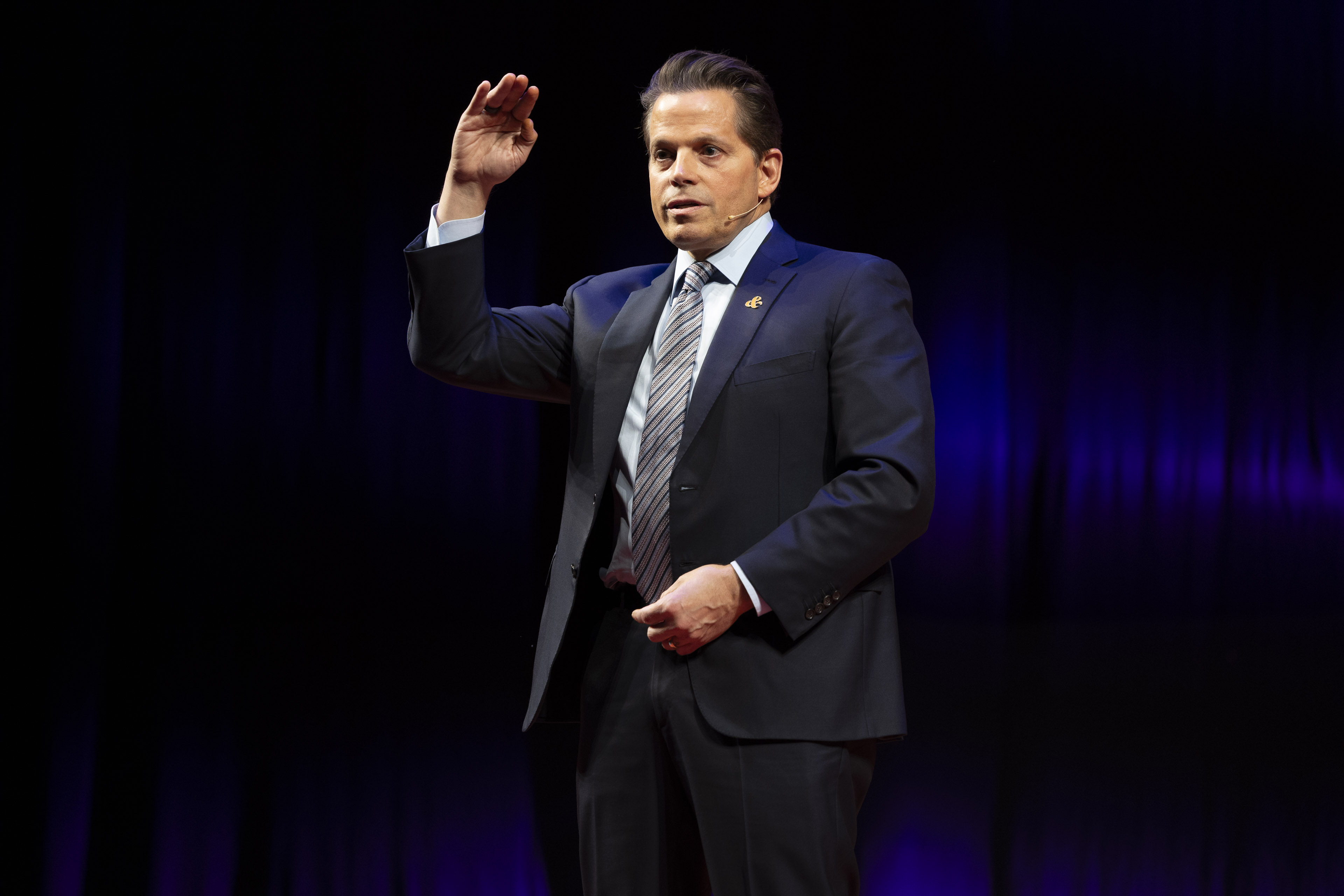

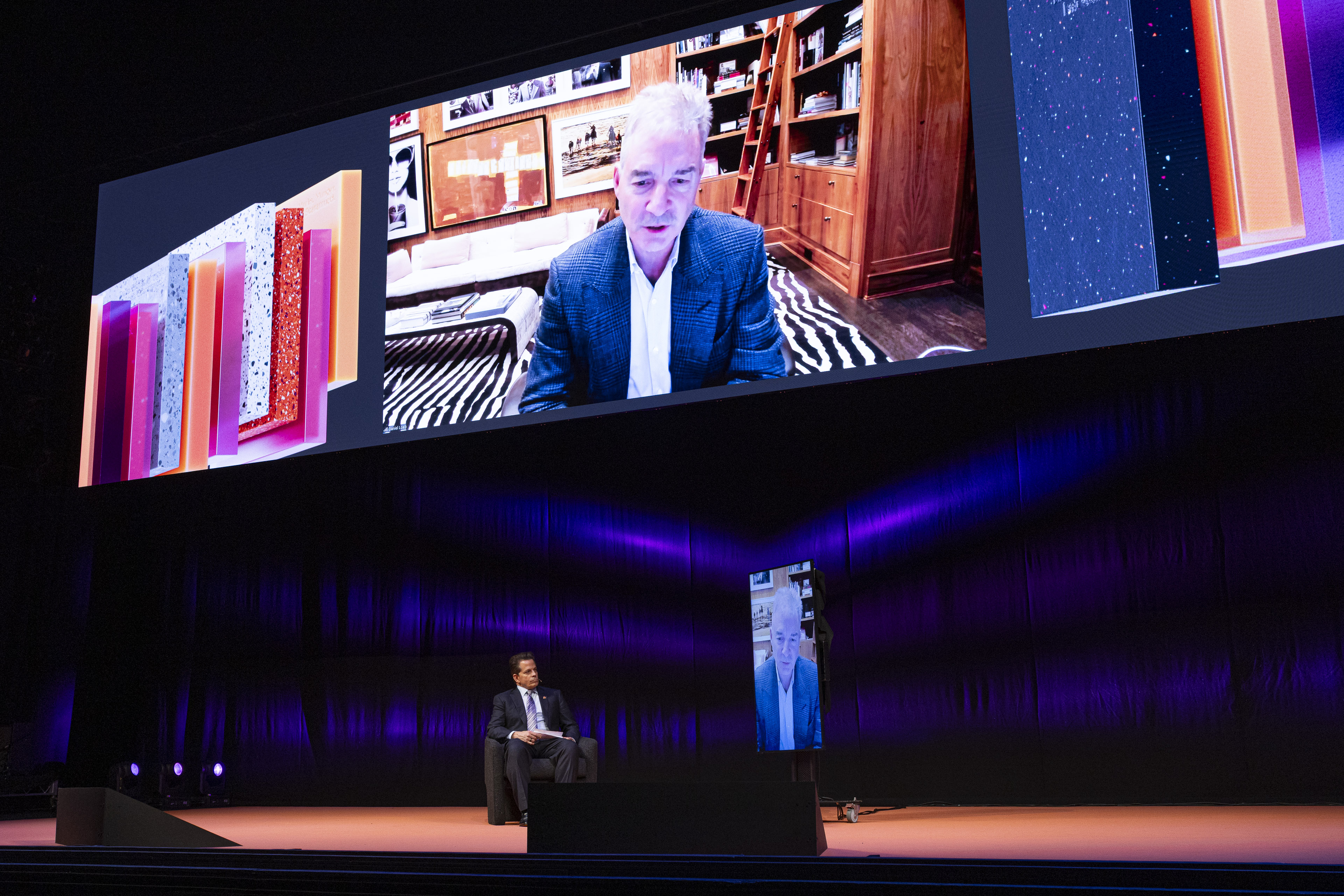
“The Mooch”, as he’s affectionately known, is a man in high demand. He’s flown into Sydney to headline the Sohn Hearts & Minds conference at the Opera House, an investment community jamboree that raises money for charity. He landed in London the night before, and will leave Sydney the next day for the brutal 24-hour return to New York.
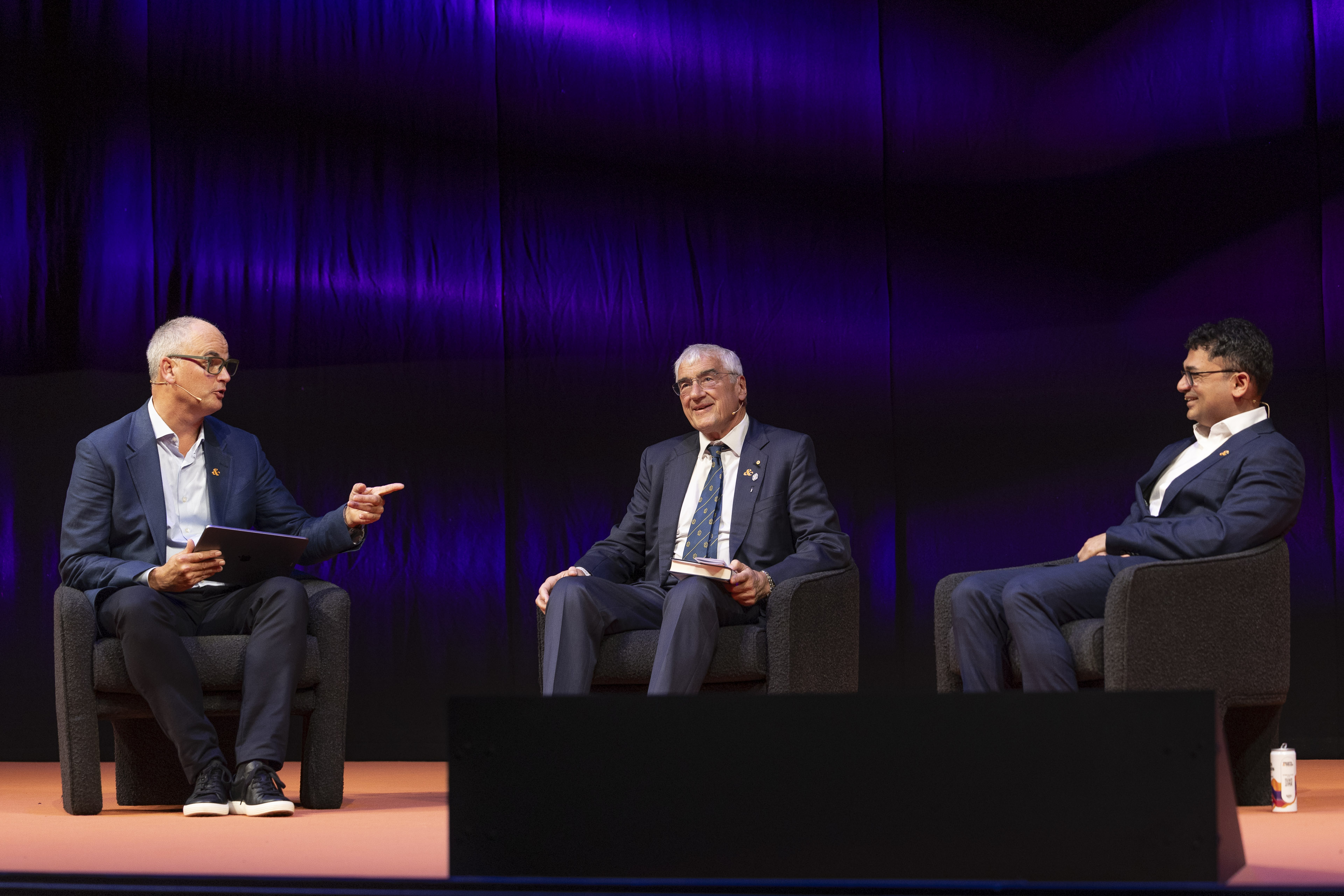
Australian investors should be more worried about China than sweating on Federal Reserve independence and other market obsessions to do with Donald Trump, says billionaire conservative Baron Michael Hintze.
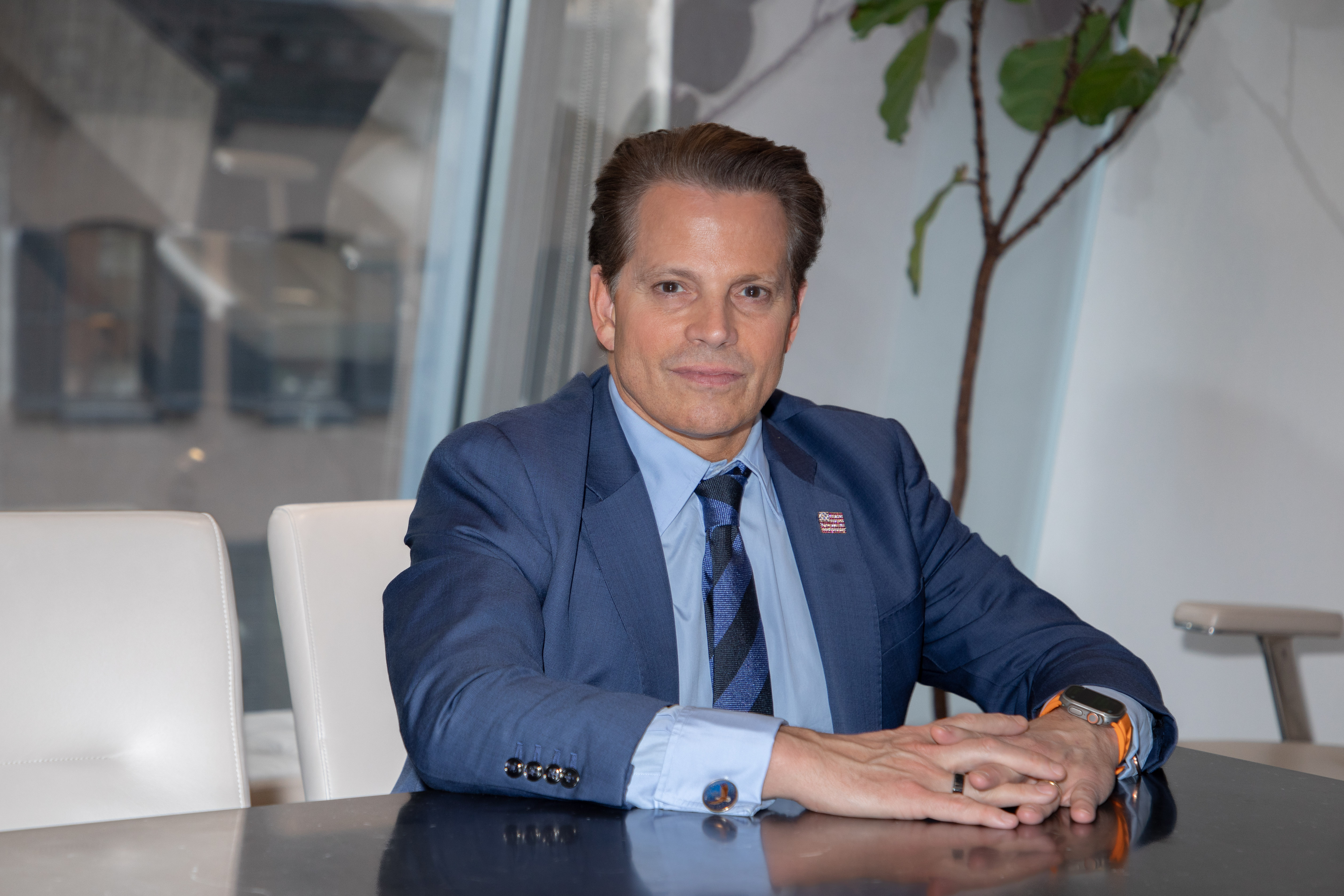
Beyond Wall Street, The Mooch is better known for his cutting takes on US politics in the popular podcast The Rest is Politics: US, which he hosts with BBC’s long-term North American correspondent Katty Kay.
.svg)